
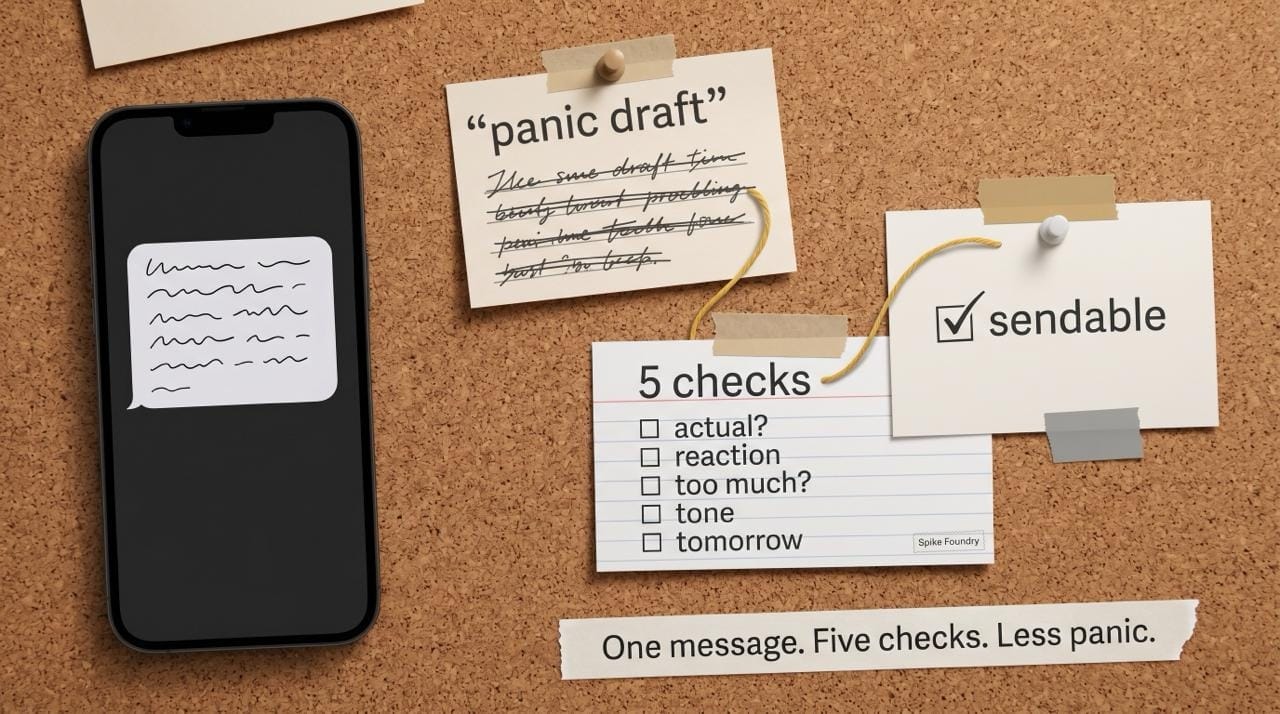
For the message you typed, deleted, rewrote, and still do not trust.
Some texts get weird before anyone else even sees them.
You write one sentence. Then you add context. Then you soften the context. Then you explain why you are explaining. Five minutes later, you are defending yourself in a courtroom that exists entirely in your phone.
This checklist is the pause before that version goes out.
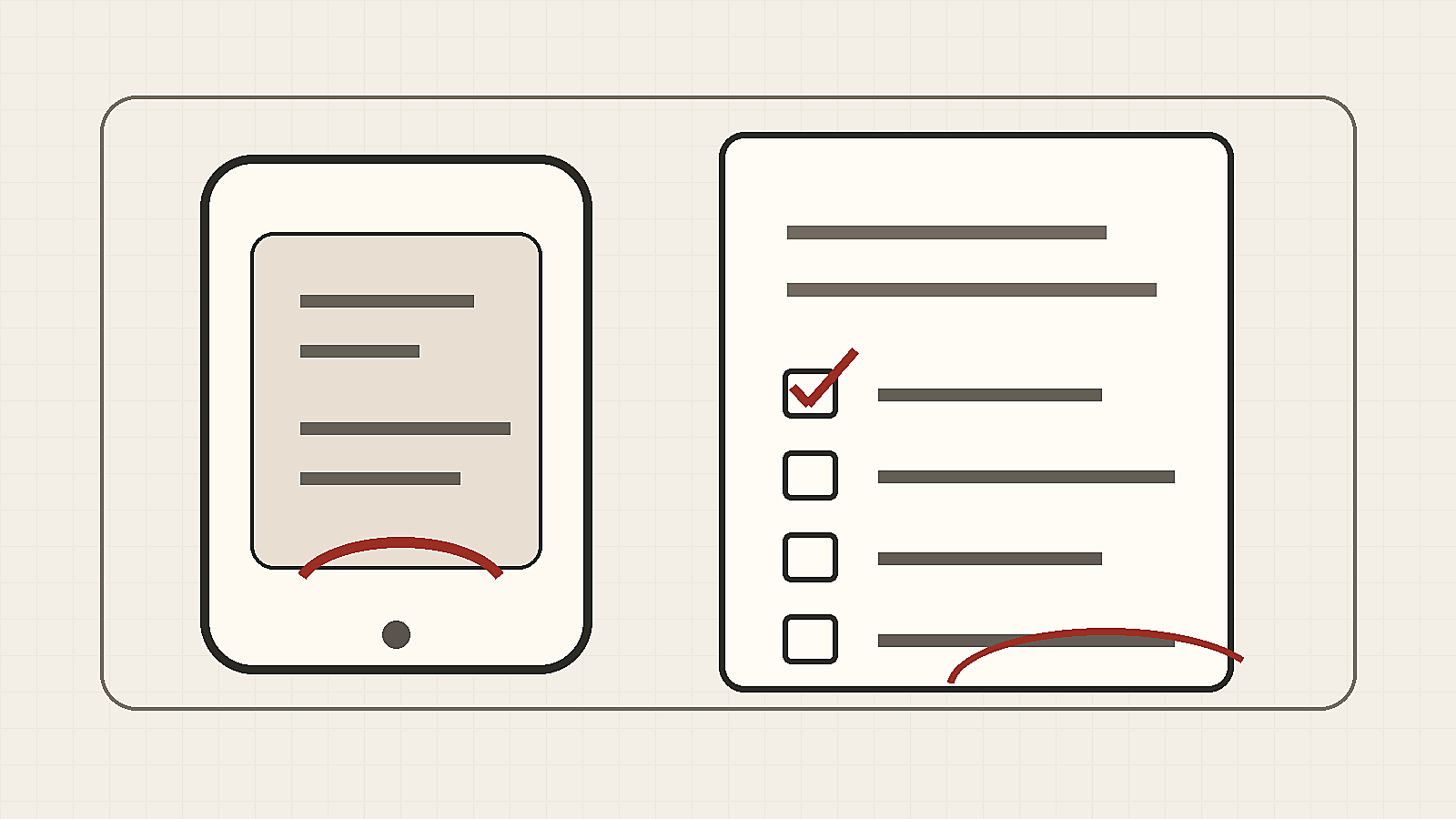
The 5-minute check
Before you send the message, ask five questions:
- Did I answer the actual message?
If they asked one thing, do not reply to six imagined things. - Am I trying to control their reaction?
You can be clear. You cannot guarantee how they receive it. - Did I add too much because I felt anxious?
Extra words can make a normal message feel heavier than it is. - Is the tone clear without being cold?
Short is fine. Sharp is different. - Would I be okay rereading this tomorrow?
If future you would cringe, soften it or wait.
The simple score
- 4-5 yes answers: send it.
- 2-3 yes answers: simplify it.
- 0-1 yes answers: wait 10 minutes, then rewrite from one of the examples below.
The goal is not to craft the perfect text. The goal is to send something honest, clear, and not powered entirely by panic.
10 replies you can steal
1. When you need more time
Use this: "I want to answer this properly, but I need a little time. I'll get back to you later today."
Why it works: It gives them certainty without forcing you to reply before you are ready.
2. When you want to say no without sounding harsh
Use this: "I can't do that, but I appreciate you asking."
Why it works: It is direct without building a courtroom defense around your no.
3. When you are interested but do not want to overdo it
Use this: "I'd like that. Let me know what time works for you."
Why it works: It shows interest without auditioning for approval.
4. When you need to apologize
Use this: "You're right. I should have handled that better. I'm sorry."
Why it works: It owns the issue without turning the apology into a speech.
5. When you want clarity
Use this: "I might be reading this wrong. What did you mean by that?"
Why it works: It asks instead of assuming, which prevents a lot of unnecessary spirals.
6. When someone gave a dry reply
Use this: "No worries. I'll leave it there for now."
Why it works: It keeps your dignity and does not chase energy that is not being returned.
7. When you want to end the conversation respectfully
Use this: "I don't think we're getting anywhere good right now. I'm going to step away."
Why it works: It exits without escalating.
8. When you are tempted to send a paragraph
Use this: "The short version is: I felt off about it, and I wanted to be honest instead of pretending I didn't."
Why it works: It compresses the emotion into something a person can actually respond to.
9. When you need to reschedule
Use this: "I need to reschedule. I'm sorry for the late change. Would tomorrow or Thursday work instead?"
Why it works: It apologizes once, gives options, and does not over-explain.
10. When you do not know what they meant
Use this: "I'm not sure how to take that. Can you say it another way?"
Why it works: It slows the moment down without accusing them of anything.
The paragraph test
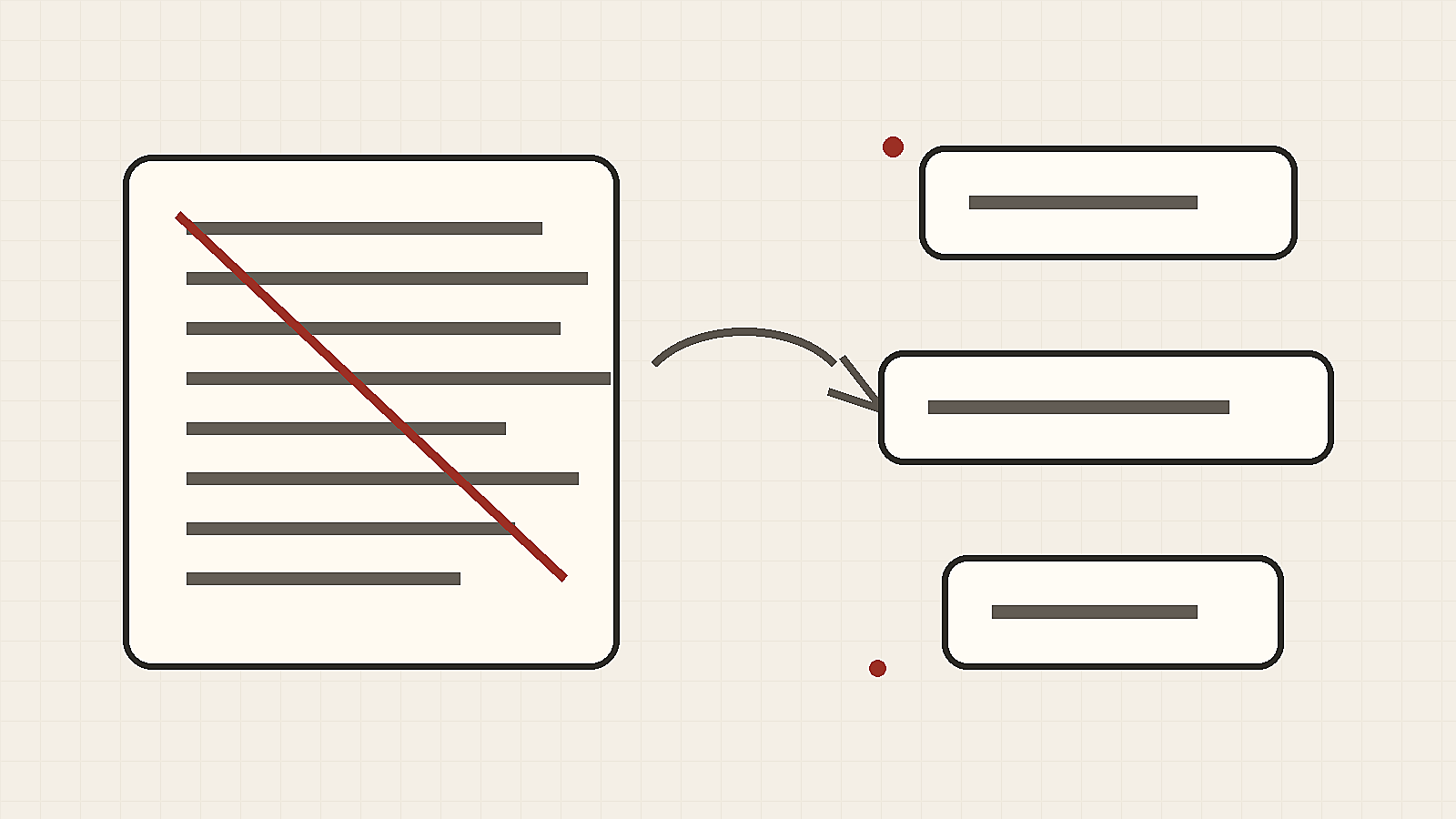
If your message is more than six lines, ask this:
Am I explaining, or am I trying to be impossible to misunderstand?
Those are different.
Explaining is useful. Trying to be impossible to misunderstand usually creates a longer, more anxious message that still may not land.
Try cutting it down to:
- What happened.
- What you feel or need.
- What you are asking for.
That is usually enough.
If you are still stuck
Copy this and fill in the blanks:
I want to be clear without making this bigger than it needs to be. I felt [feeling] when [specific thing happened]. What I need is [specific request or boundary].
Example:
I want to be clear without making this bigger than it needs to be. I felt dismissed when the plan changed last minute. What I need is a heads-up earlier next time.
Not perfect. But usable. Usable beats perfect when you have been staring at the same message for 20 minutes.
One more option
If you want another angle, try the message in Vervo and compare a few reply options. Use the version that sounds most like you on a clear day.
If you want more notes, scripts, and small tools like this, you can follow Spike Foundry.
— The Operator